

On certain sites you can easily buy likes and views. For a few tenners, the Instagram post of your choice gets a digital heart from ten thousand accounts. Wonderful, all that love, right? No. We think it's worthless. The like count suggests your snapshot is a World Press Photo contender, but it's as fake as a Messi shirt bought on the beach during your holiday. It's a form of manipulation. And that's what this article is about. Not to score virtue points or lecture anyone, but to show it can be done differently. Better, fairer and more valuable!
Misleading search engines
 Manipulation is everywhere online. Also within SEO. How? By misleading search engine crawlers, the software that roams the internet and indexes pages. Search engines don't see what people see. You can lure them to your site quite easily by crafting your anchor text so that the search engine finds it interesting and ranks it high.
The unsuspecting internet user clicks through. "Google finds it interesting, so this site must be good." Not so. It's the equivalent of: "This Instagram video has ten thousand likes, so something really funny is coming." Well, forget it.
Yes, this way of generating traffic works. But you will never catch Hatless doing it. If you know us, you know we love beautiful, genuinely earned links. Yes, earning such a link costs money and is more labour-intensive than a manipulative tactic. Finding genuine connections takes time. But this way of working pays for itself again and again. We never buy anything in; we compensate the publisher for the exposure. And only when the article the link appears in meets our quality standards, fits our client and offers the reader something.
"But it works"
 It's a shame not everyone sees it that way. There will always be companies looking for the shortest route to their destination, blind to their surroundings and the opportunities in them. Companies without a sense of quality, forever hiding behind the motto "but it works". Companies that don't just sell fake engagement, but sell the soul of their business along with it.
We sincerely hope these tactics have passed their expiry date. We can't control that, but we do want to appeal to your feeling for a brand. What do you want your brand to be known for? That reason to exist should show in your link profile too. Because you do want links that fit your brand, don't you?
People often ask where we stand in this discussion. As you've read, we're quite outspoken, but here are our positions once more:
- The moment you have influence over the anchor text, you are by definition manipulating. Manipulation is never good.
- You should get links because you deserve them and because your site genuinely fits the site linking to you. Nobody is waiting for irrelevance.
- Does a number one position in Google make you happy? And do you want it at any cost? How much better is it to earn that position with your brand, based on your reason to exist, instead of through manipulation?
- Look in the mirror. What do you stand for? You probably do what you do because you enjoy it and you're good at it. Why would you ever choose a manipulative strategy that has nothing to do with who you are?
- Something that takes a lot of time is not cheap. Links take manpower, brainpower, creativity, empathy and assertiveness. They don't fall from the sky.
- We see a link as a recommendation. A genuine recommendation, given because someone rates you, is worth far more than a mention on a site nobody visits that exists purely to manipulate crawlers. Which recommendations would you rather have?
SEO specialists are blinded by rankings
"I'd forget everything you read about 'link juice.' It's very likely all obsolete, wrong, and/or misleading. Instead, build a website that works well for your users."
John Mueller, Google, 6 years ago

Of course we understand you want to give search engines as much love as possible, and that you want your clients at number one for the most relevant searches. We also understand that management or the client may not know how Google works, and that positions in search engines are the way to show how good you are.
We even understand that as an SEO specialist you are judged on your rankings, because companies pay you to achieve them.
It seems logical and innocent, but do this and you are manipulating the search engines. You lure them with a juicy sausage that, once cut, turns out dry and tasteless. SEO specialists are often so Google-minded that they wake up and fall asleep with Google scores. It's an easy strategy; all you need is deep pockets. Any SEO agency can execute it. It scales nicely. You only need the contacts; it's buying and selling. That's why many (large) SEO agencies work this way. You are literally selling links to manipulate positions in search engines. And it works. So everybody wins. Right? No!
We, independent thinkers, see it differently. We believe you should earn rankings based on your reason to exist, confirmed by real sources and real websites. Not based on who has the biggest bag of money to buy links. You wouldn't sell your values, would you?
Examples of manipulation? We see them all the time!
The tricks of a few years ago were crude. Today it is subtler, and increasingly put together entirely by AI. Four examples we came across, from openly sold to machine-produced.
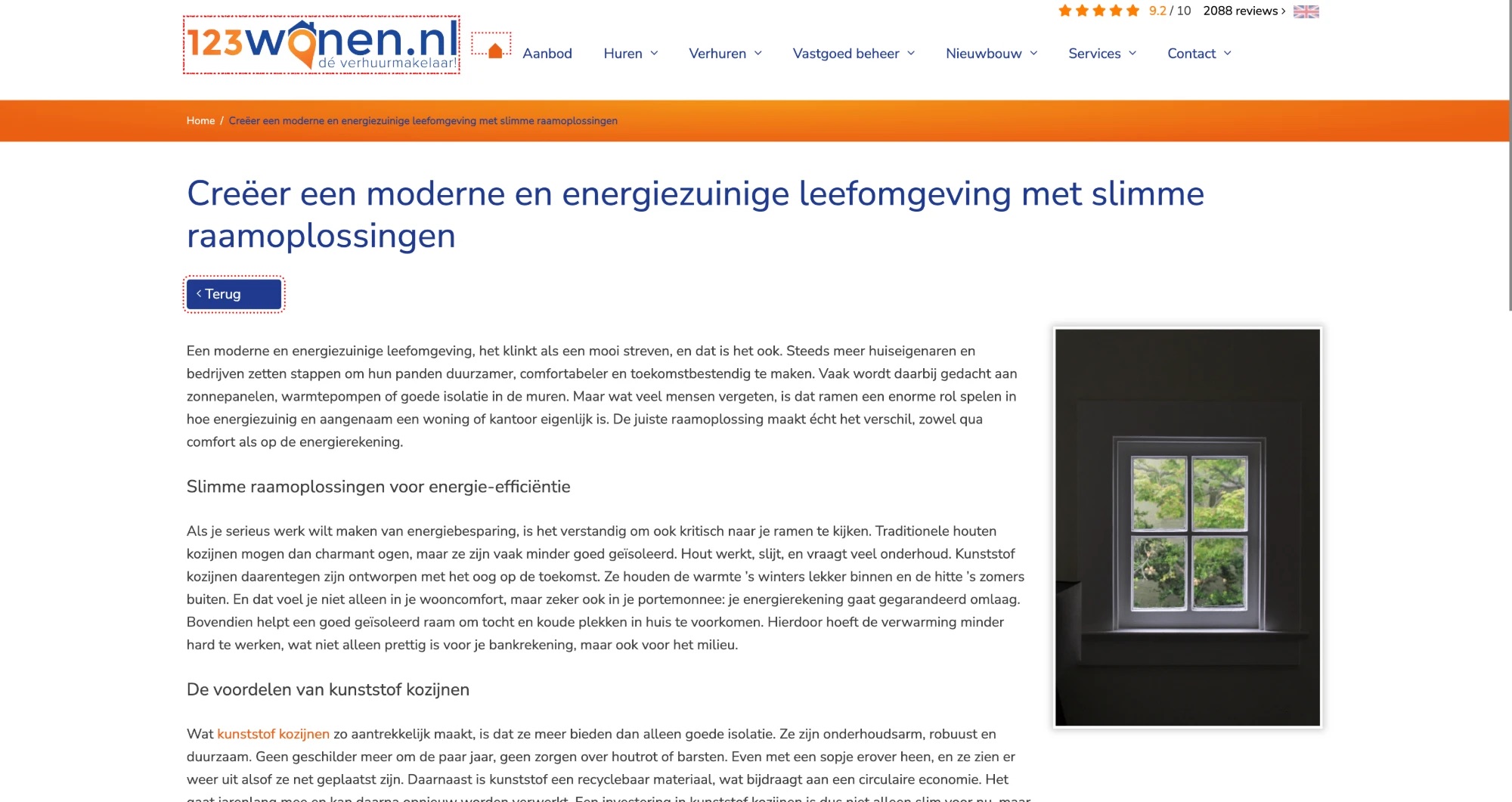
123wonen.nl, a rental agency linking to a window webshop
A rental agency explaining how to "create a modern and energy-efficient living space with smart window solutions"? The only two keyword links in the piece, kunststof kozijnen and kunststof draaikiepraam, point to the category pages of a window webshop. The footer literally carries the headings "Blogpartners" and "Linkpartners": a menu for selling links. No advertorial label, no nofollow.
Shallow articles on damespraatjes.nl and fhm.nl
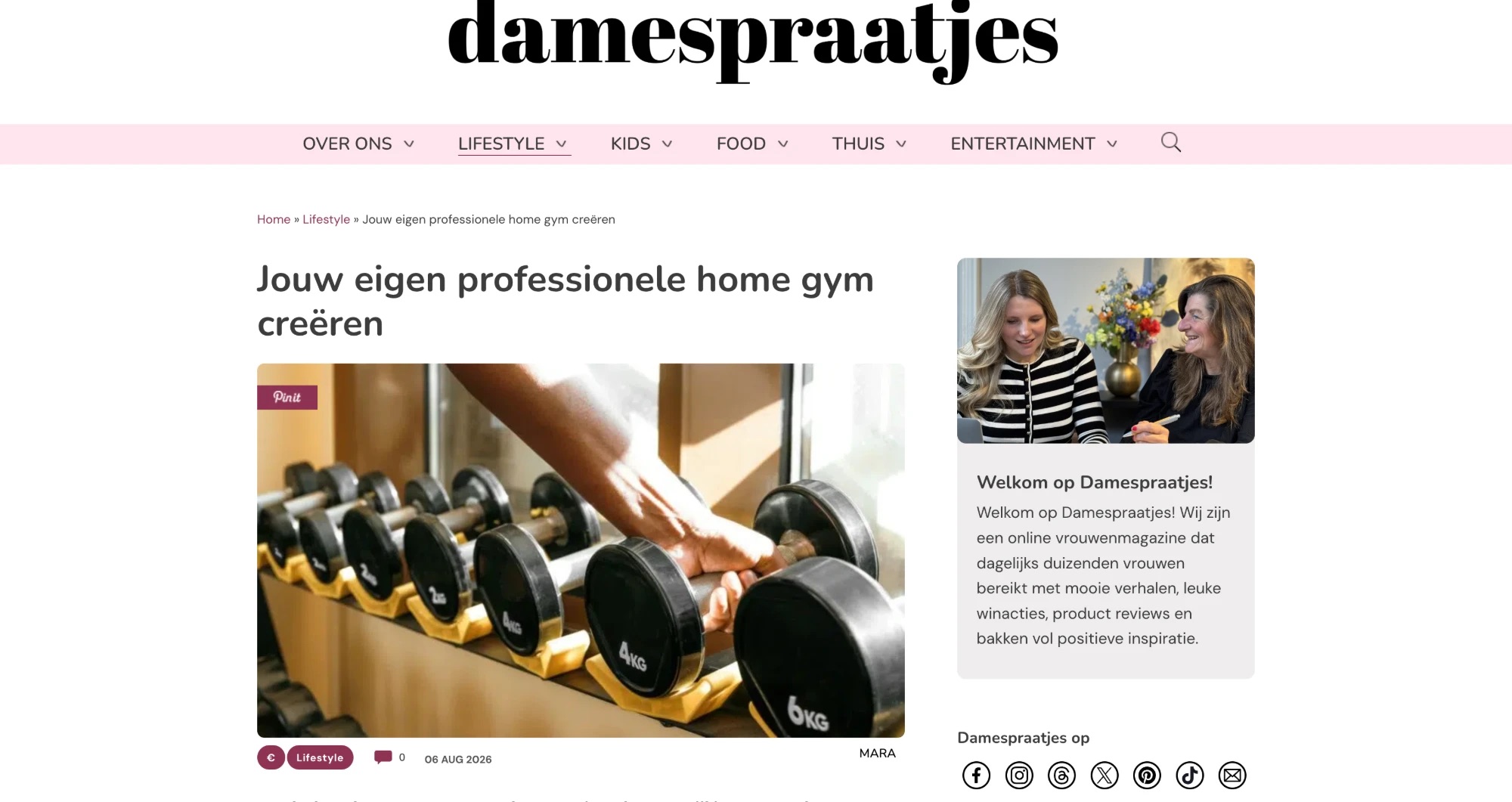
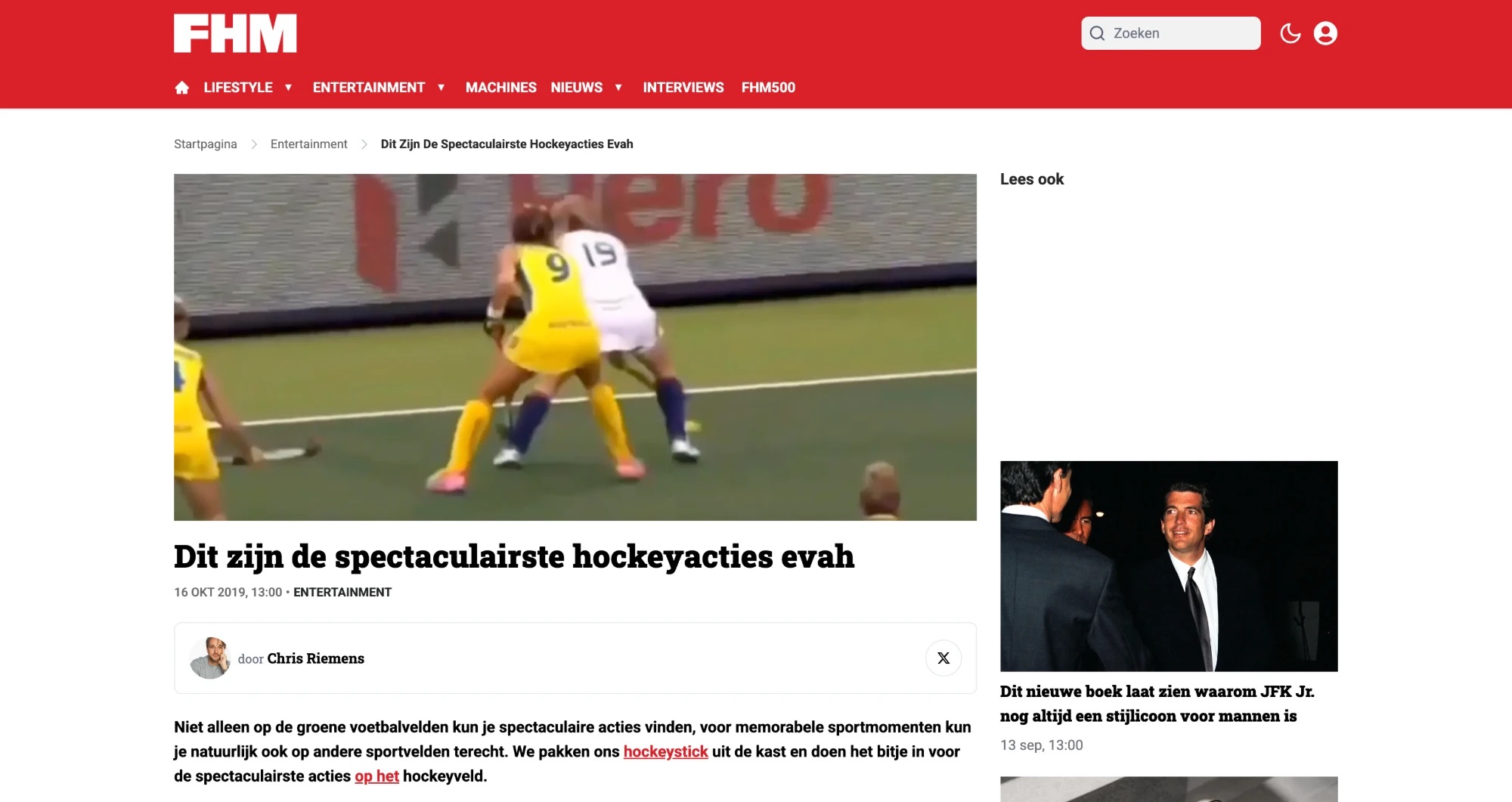
Sometimes the topic just about covers it, and that is exactly what makes it harder to spot. A women's magazine with "your own professional home gym" (brand anchors Life Fitness and Technogym, both to the same fitness webshop), and a men's magazine with a piece on "the most spectacular hockey goals" from 2019 where the word hockeystick suddenly links to a hockey shop. The theme fits on the surface, but the link is the only goal: a followed, unlabelled reference to a webshop with a commercial anchor. Manipulation does not have to be absurdly off-topic to be manipulation.
An AI website acting as a PBN: woneninbeaufort.nl
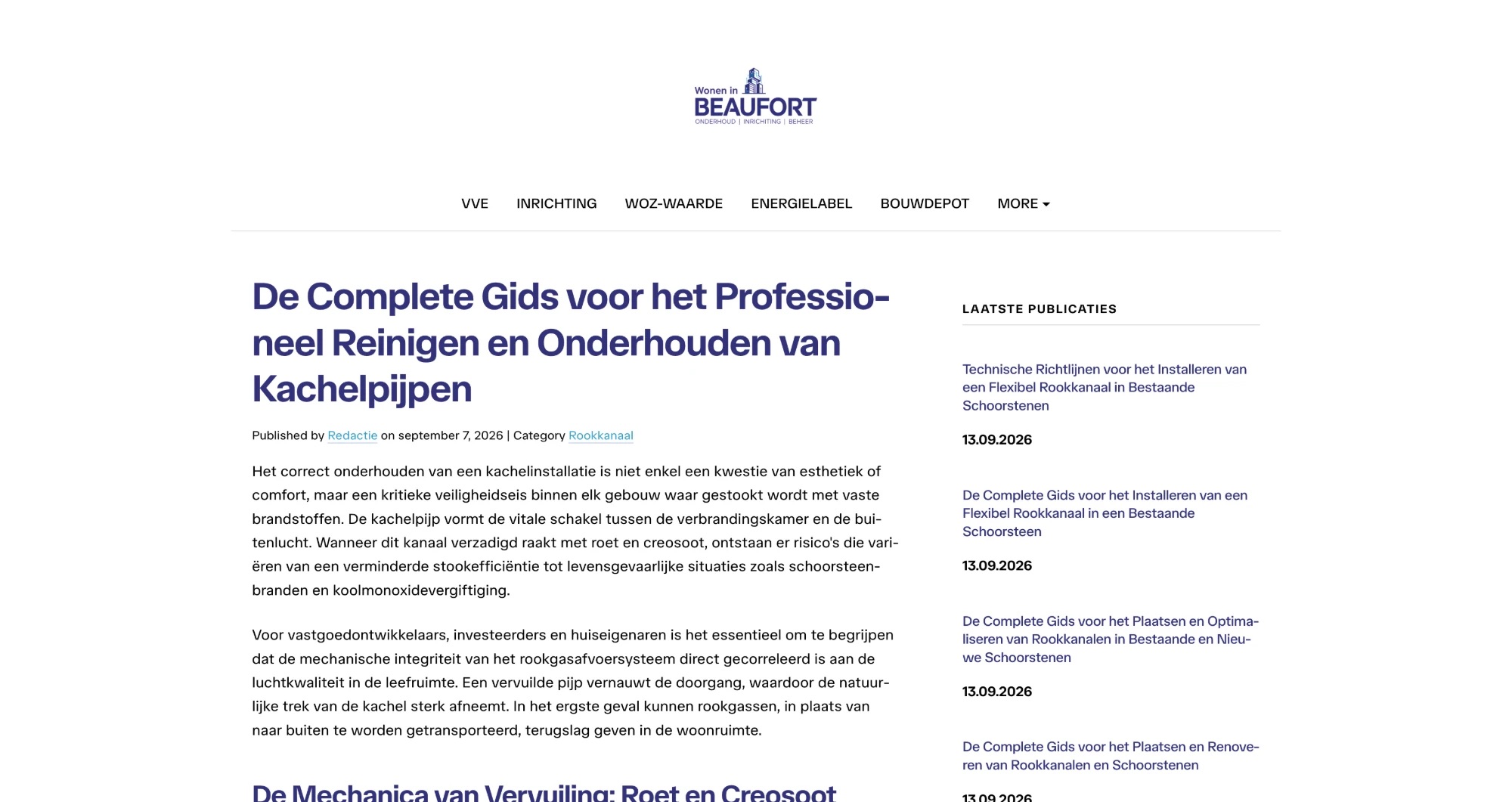
This is the 2026 version: fabricated entirely by AI. A "living" site that covers everything from ground lease to bathroom renovation to "The Complete Guide to Professionally Cleaning and Maintaining Stove Pipes". Read it and it makes no sense: a long, quasi-technical wall of text with no added value, written for the crawler and not for you. Ten near-identical "Complete Guide" articles, all published on the same day. And the proof that no human looked at it: halfway down the page a block of ChatGPT formatting has been left in place, a literal ```markdown line in the published text. The "sources" at the bottom? Four bare domain links to webshops (stoves, chimney supplies, hot tubs), disguised as citations.
These are purely articles for short-term SEO gains. No value on the web, no reader who benefits, and exactly the kind of practice search engines punish ever harder. What "works" today is tomorrow a link profile full of pages you don't want to be associated with.
How it should be done: earned links, lasting growth
The alternative is slower and more labour-intensive, but it compounds. With two of our clients you see exactly what earned links do over the long run.
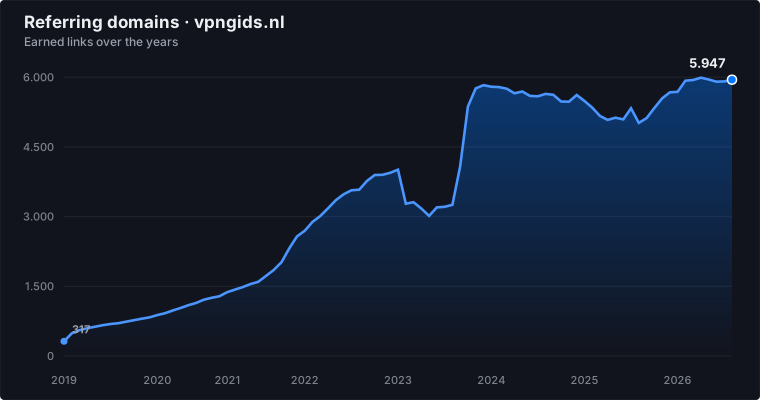
VPNGids.nl built an impressive link profile in a few years: from around 300 to almost 6,000 referring domains. Not bought keyword anchors, but genuine mentions that stayed put and kept growing.
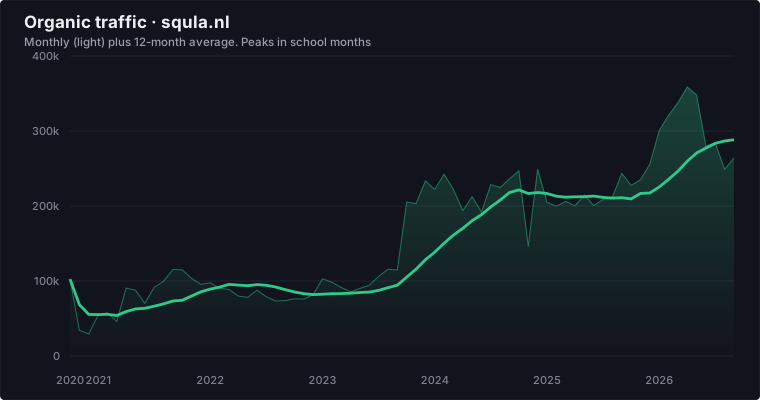
Squla.nl shows what that does for your visibility. Organic traffic moves with the school seasons, peaking in the winter months, but the trend clearly points up.
And look at Squla's anchor profile. The brand name sits at the top throughout: Squla, squla.nl, leuk leren. No keyword anchor dominating the list. That is what an earned profile looks like. The only non-branded entries near the top are outright spam anchors like "TELEGRAM @SEO_ANOMALY, SEO BACKLINKS, PBN", nofollow junk that every strong site attracts and that disappears next to the branded anchors.
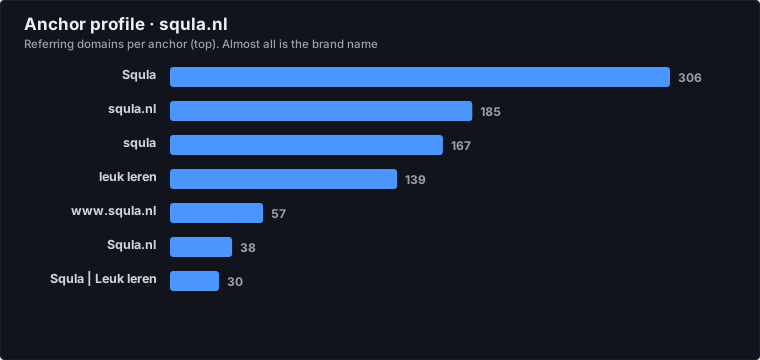
That is the difference. A bought profile leaves a footprint: the same keyword anchors, purchased placements without relevance, influence on the anchor text. An earned profile does the opposite. It fits your brand, it is there because someone values you, and it keeps delivering value long after the work is done.
Need a second opinion, or manipulating a little yourself?
We realise this article won't only make us friends. We speak out strongly against manipulative tactics and companies that want to score too easily. Still, some nuance is in order: we emphatically don't want to be the class goody-two-shoes measuring other SEO companies.
What do we want? To challenge others to do better than they do now. Don't take the shortcuts; take the scenic route and observe the landscape. Create content that draws genuine oohs and aahs from your visitors. Let your link profile reflect your company's identity. Be unique and authentic. Make real connections, with earned links. That leads to far more value and satisfaction.
As part of our vision we want a more sincere SEO market, and we believe low quality shouldn't be rewarded. Could you use a second pair of eyes, or are you curious what we think of your link profile? We're happy to do a short check-up and a call. Free, of course. Will you call us?